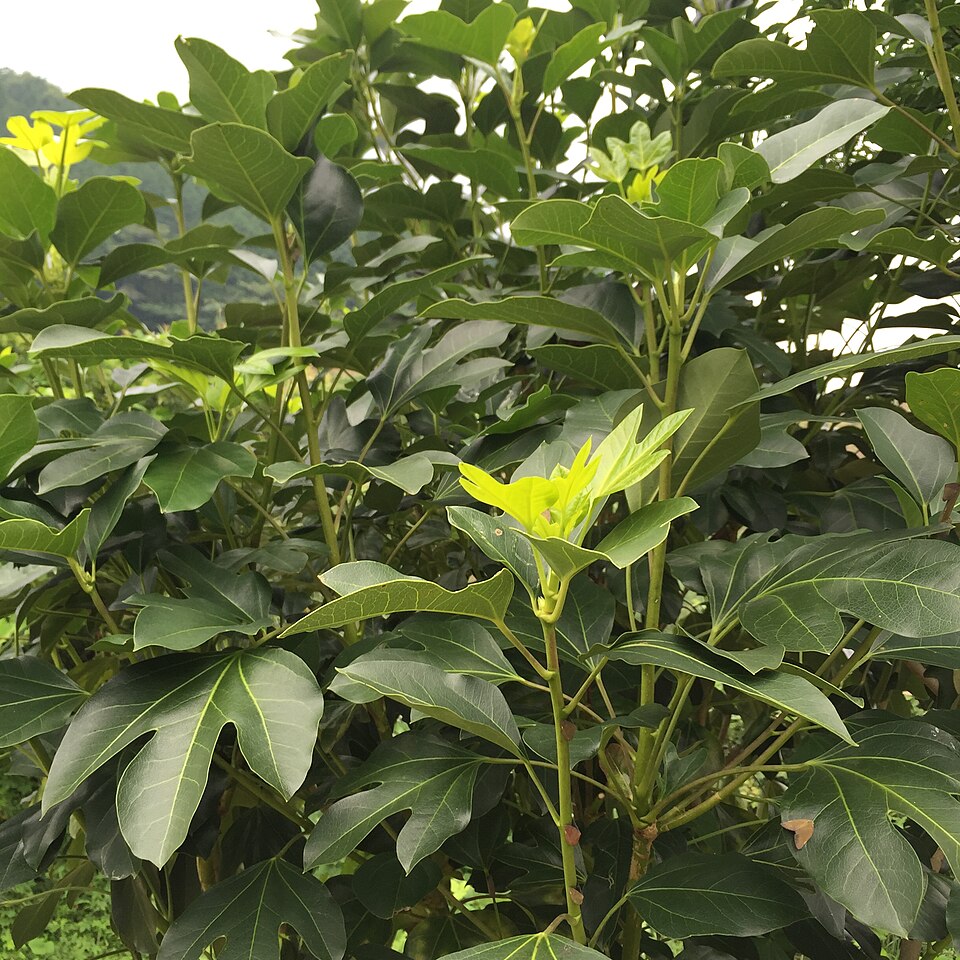
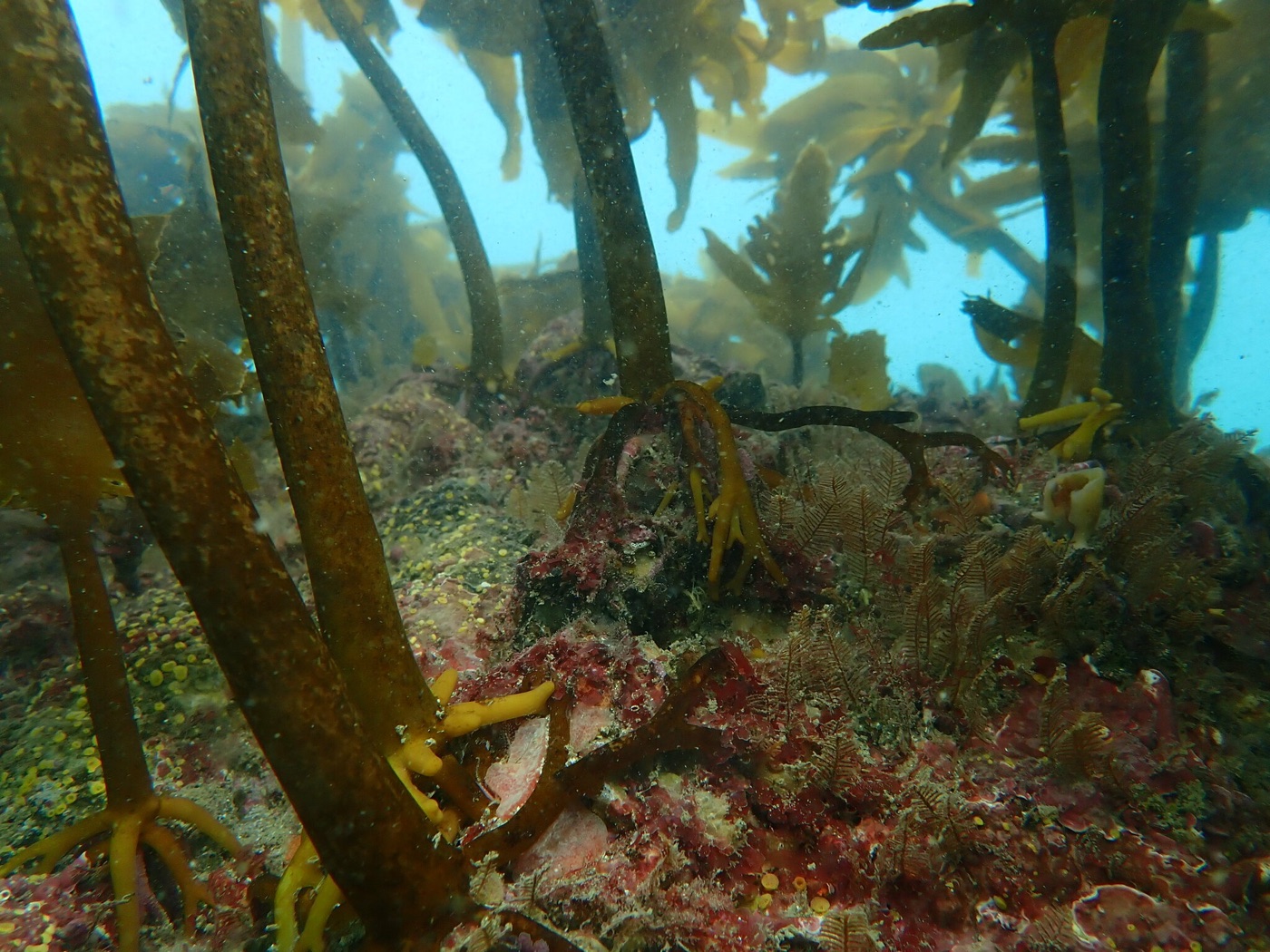
Jeju Recov's two source botanicals: Dendropanax morbiferus (hwangchil) and Ecklonia cava (gamtae). Dendropanax photo: Dalgial / Wikimedia Commons (CC BY-SA 4.0).
Jeju Recov is a hangover-relief and liver-support extract drawn from two Jeju botanicals, Dendropanax morbiferus and Ecklonia cava. In a human trial it cut blood acetaldehyde, the hangover-inducing substance, by 18.5% and improved perceived hangover severity by as much as 26.7%.
Ingredient specification
- Brand nameJeju Recov®
- Ingredient nameDendropanax morbiferus, Ecklonia cava
- Manufacturing methodEthanol extraction
- Marker compoundsChlorogenic acid, dieckol
- Recommended intake1.34 g per day, as Dendropanax and Ecklonia cava extract
- OriginJeju, Korea
What Jeju Recov does
- Promotes alcohol metabolism
- Reduces toxic substances
- Antioxidant
- Liver protection
The marker compounds are chlorogenic acid and dieckol. The extract supports alcohol metabolism and helps reduce the toxic by-products of drinking, with antioxidant and liver-protective activity.
Clinical results
The trial was conducted at the Global Medical Research Center with 30 adult men and women, taking a single dose before drinking in a crossover design. Safety was confirmed through 15 hours of intensive post-intake monitoring.
| Test | Time | Control | Experimental | p | Reduction |
|---|---|---|---|---|---|
| Blood acetaldehyde | 4 h | 1087.9 | 886.6 | 0.001 | 18.5% |
| Blood acetaldehyde | 2 h | 1244.6 | 1075.8 | 0.013 | 13.6% |
| Blood alcohol | 4 h | 608.77 | 552.29 | 0.033 | 9.3% |
| AHSS (hangover severity) | 4 h | 20.69 | 15.86 | 0.043 | 23.3% |
| AHS (acute hangover) | 2 h | 15.28 | 11.69 | 0.046 | 23.5% |
| AHS (acute hangover) | 4 h | 14.21 | 10.41 | 0.049 | 26.7% |
Note: results may vary by individual.
Patent & journal
- Patent
KR 10-1958969 - JournalFood Eng. Prog. 2018;22(2):110–117.
Source botanicals. Jeju Recov combines Dendropanax morbiferus (hwangchil) and Ecklonia cava (gamtae), both cultivated and harvested on Jeju. The marker compounds, chlorogenic acid and dieckol, correspond respectively to these two botanicals.